
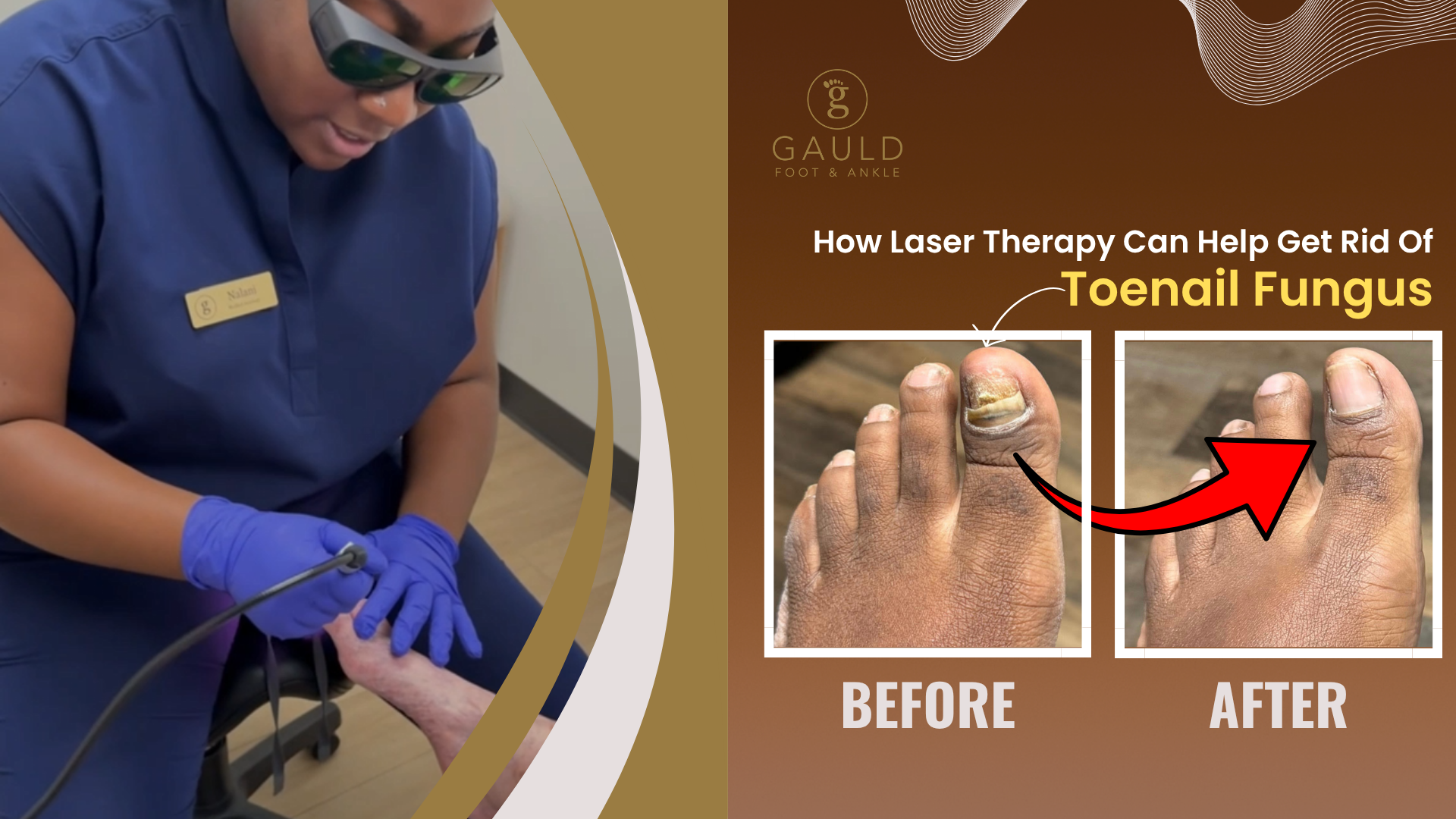
What can I do about my toenail fungus
If you are dealing with toenail fungus and want to focus on one in-office option, laser therapy is often discussed as a way to reduce or eliminate fungal organisms within the nail unit and support the growth of a clearer nail over time. While outcomes vary by person and by device, laser treatment aims to help by delivering energy through the nail plate to target fungus in and around the nail bed with minimal impact on surrounding skin.

How laser therapy for toenail fungus is intended to help
Toenail fungus (onychomycosis) resides within the nail plate, nail bed, and sometimes the surrounding tissue. The nail itself can act like a barrier, making it difficult for external approaches to meaningfully reach deeper fungal reservoirs. Laser therapy is designed to address this challenge by transmitting focused light energy through the nail plate. Depending on the technology used (for example, specific wavelengths and pulse patterns), the device is intended to create a thermal and/or photomechanical effect that disrupts fungal structures and reduces fungal burden.
Clinically, the “help” patients are usually seeking looks like:
- Lower fungal load within the nail unit, making the environment less favorable for persistence and spread.
- Improved nail appearance as a clearer nail grows out from the base (the matrix).
- A localized approach that concentrates treatment at the nail rather than relying on whole-body exposure.

What the appointment typically involves
Laser sessions are usually performed in a podiatry or dermatology clinic. The podiatrist will examine the nail(s), assess thickness and involvement, and may confirm that the nail changes are consistent with fungus. During treatment, the laser handpiece is applied to the nail and sometimes the surrounding skin folds. Most patients describe the sensation as warmth but if discomfort is felt, it is generally short-lived.
A session is typically measured in minutes rather than hours, and many people resume normal activities immediately afterward. Because the aim is to target fungal organisms within the nail unit, podiatrists may treat multiple nails in the same visit if needed.
Why nail thickness matters (and how laser can still be useful)
Thickened, dystrophic nails are common in longstanding infections. Thickness can influence how energy travels through the nail plate and how evenly the nail unit is exposed to treatment. In practical terms, laser therapy can still be used for thick nails, but podiatrists often pay close attention to nail thickness, heat build-up, and the total energy delivered to avoid excessive discomfort while still treating the full surface of the nail.
The Treatment Process: What Patients Should Know
Step 1: Evaluation
Our podiatrist will assess your condition and determine if laser therapy is the right treatment for you.
Step 2: Customized Treatment Plan
Based on your diagnosis, a series of sessions will be recommended.
Step 3: In-Office Treatment
Laser therapy is performed in-office and requires no anesthesia or downtime.
Step 4: Gradual Healing & Follow-Up
- Fungal nail improvement takes time as the nail grows out
- Follow-up visits ensure optimal results
What results can realistically look like
It is important to separate two related goals: reducing fungal organisms and achieving a fully normal-looking nail. Even if fungal burden is reduced, nails do not “turn clear” overnight because the damaged nail must grow out. Toenails grow slowly; visible improvement typically emerges over months as new nail replaces older, affected nail.
Laser therapy can help by creating conditions that favor healthier regrowth, but results are not uniform. Some people see substantial cosmetic clearing; others see partial improvement. Recurrence is possible, particularly if fungal exposure continues in shoes, communal wet areas, or household environments where spores can persist.
The bottom line on how laser therapy can help
Laser therapy can help toenail fungus by targeting fungal organisms within the nail unit in a focused, in-office manner and by supporting the growth of a clearer nail over the months that follow.
Comprehensive Care Under One Health Network
For patients who require vein or vascular evaluation, we work closely with Gauld Vein & Vascular to ensure comprehensive care. Both Gauld Foot & Ankle and Gauld Vein & Vascular operate under Gauld Health, providing coordinated, multispecialty treatment designed around your overall wellness.
This integrated approach allows us to address both musculoskeletal and vascular concerns, ensuring you receive complete, streamlined care.
Call us today (678) 215-1882 or request an appointment online