Benefits of Proper Shoes for Kids
If you’re a first-time parent, buying kids’ shoes can feel surprisingly stressful. Sizes change fast, every brand fits differently, and you might wonder if you’re doing something wrong when your child suddenly trips more or says their feet feel “tired.” The good news: you don’t need to overthink it—you just need a few simple rules to protect comfort now and support healthy growth long-term.
This guide breaks down the benefits of proper shoes for kids, what to look for at different ages, and how to spot when your child may need extra support (including for flat feet).
Early Steps: When kids actually need shoes
New parents frequently ask: when should babies start wearing shoes? For early walking indoors, many pediatricians recommend barefoot time because it helps build balance and foot strength. Shoes become important when your child is walking outdoors or a room with possible hazards —basically, anytime protection is needed.
For brand-new walkers, look for shoes that protect without “over-controlling” the foot. Prioritizing flexible soles for crawlers and beginner walkers helps feet bend and grip naturally, and it supports footwear motor skill development as your child learns to balance, pivot, and explore.
A first-time parent shoe checklist (quick and practical)
- Room to grow: Aim for about a thumb’s width of space in front of the longest toe.
- Toe box: Wide enough for toes to wiggle—no squeezing.
- Heel: A firm heel counter (the back of the shoe) helps stability.
- Flex: The shoe should bend at the ball of the foot, not in the middle like a taco.
- Comfort test: If your child refuses the shoes, gets red marks, or trips more, treat that as feedback – not as “being difficult.”
Special Focus: Supporting flat feet in children

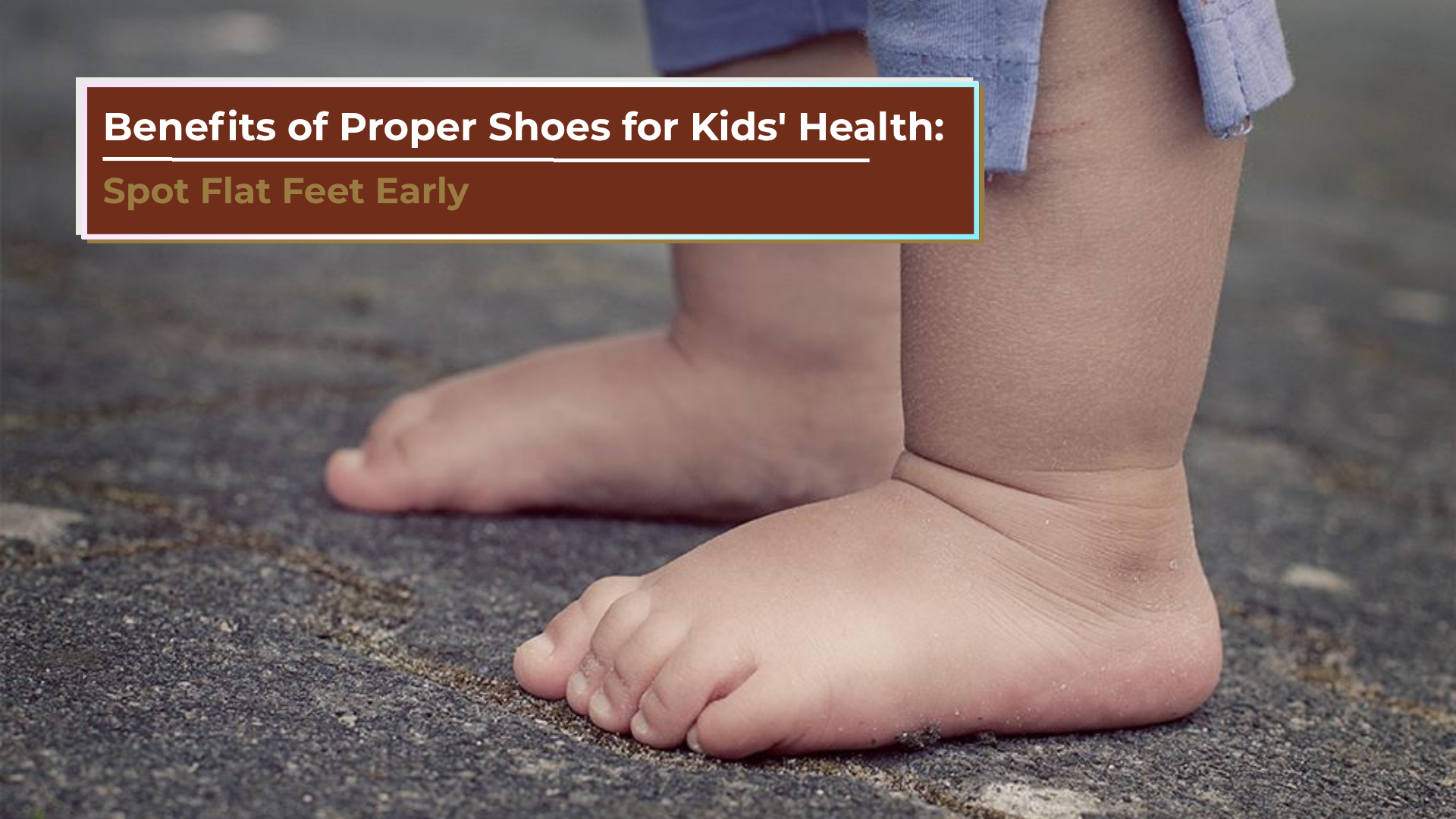
It is entirely normal for babies and many toddlers to look flat-footed because arches develop over time and there’s often a soft pad of baby fat. Most children outgrow this naturally. Still, some kids need extra support—especially if you notice foot/leg fatigue, frequent tripping, uneven shoe wear, or complaints after walking or sports.
For early walkers, finding the best toddler shoes for flat feet usually comes down to three things:
- A roomy toe box
- A stable heel
- A supportive midsole.
In some cases, doctors might suggest orthopedic shoes for toddlers’ flat feet like a custom orthotic made uniquely for your child, but many children do well in quality everyday toddler shoes for flat feet that provide gentle structure.
How a podiatrist can help early
Podiatrists treat pediatric conditions, including persistent flat feet, and heel pain. For first-time parents, a podiatry visit can be reassuring because it helps you understand what’s normal for your child’s age and what needs support.
Seeing a podiatrist early can help a child grow up better by catching problems before they turn into ongoing pain or activity limits. A podiatrist can assess how your child stands and walks, check flexibility and alignment, and recommend practical next steps—like stretching/strengthening for foot and leg muscles, guidance on activity, properly fitted supportive shoes, and orthotics when appropriate.
Addressing pain, frequent tripping, or uneven shoe wear early may also help reduce strain on ankles, knees, hips, and the lower back as your child grows.
Example of a child footprint pattern that may indicate low arches (flat feet).
Source https://dromersheriff.com/flat-feet-in-children/
Avoiding hidden hazards: Posture and growth
The benefits of selecting the correct footwear go far beyond immediate comfort. A major goal of buying quality shoes is preventing childhood foot deformities, such as bunions, or ingrown toenails, which can develop from prolonged wear of tight or restrictive shoes.
There is also a direct link between ill-fitting shoes and a child’s posture and how the body moves. When shoes force a child’s foot into an awkward position, the knees, hips, and lower back can compensate—sometimes leading to pain over time.
One more first-time-parent tip: be cautious with hand-me-downs. While reusing clothes is a great way to save money, hand-me-down shoes risks are significant. Used shoes have already molded to another child’s foot shape and walking pattern, which can affect your child’s stride and support.
Materials and mechanics: What makes a great shoe?
When you’re scanning shelves (or shopping online), a few design details matter more than the brand name:
- Materials: The leather vs synthetic sneakers choice depends on your needs. Leather is durable and breathable; modern synthetics/mesh can be lighter and cooler for active kids.
- Impact protection: Good youth footwear shock absorption helps protect growing bones during lots of running and jumping.
- Fastenings: Velcro vs lace-up shoes is mostly about age and fit. Velcro is easier for little kids; lace-ups can feel more secure for older kids and sports.
Sizing it right: How often to replace shoes
Because children’s feet grow quickly, parents often ask how often their children should get new shoes. Many toddlers need a new size every 2–3 months, while school-aged kids often need new shoes every 4–6 months (sometimes faster during growth spurts).
Watch for signs of outgrown shoes like toe redness, blisters, complaints of tightness, or your child suddenly wanting to take shoes off. During shoe sizing growth spurts, a pair that fit perfectly a month ago can become too small quickly.
To get it right, make a habit of measuring kids’ feet correctly each time you buy shoes:
- Measure both feet while your child is standing.
- Measure later in the day when feet are slightly larger due to swelling
- Many pediatric podiatrist shoe recommendations suggest leaving about a thumb’s width of space in front of the longest toe.
The Bottom Line
The benefits of proper shoes for kids are simple but powerful: better comfort, safer movement, and support for healthy growth. As a first-time parent, focus on fit, flexibility, and stability—and trust your child’s cues. If pain, frequent tripping, or persistent flat feet concerns come up, a podiatrist can help you make confident choices so your child can run, play, and grow comfortably.
Comprehensive Care Under One Health Network
For patients who require vein or vascular evaluation, we work closely with Gauld Vein & Vascular to ensure comprehensive care. Both Gauld Foot & Ankle and Gauld Vein & Vascular operate under Gauld Health, providing coordinated, multispecialty treatment designed around your overall wellness.
This integrated approach allows us to address both musculoskeletal and vascular concerns, ensuring you receive complete, streamlined care.
Call us today (678) 215-1882 or request an appointment online